When you’re managing a warehouse full of lumber, pipes, tubing, or other long materials, standard pallet racks don’t work. These items don’t fit the typical box-storage mold, and forcing them into a standard system wastes space, creates safety hazards, and drives up operational costs.
That’s exactly where cantilever racks come in.
Cantilever racks are purposely built for long items, and they solve real problems for warehouse shelving setup and manufacturers.
But many operations stumble when choosing between light-duty and heavy-duty cantilever shelving systems without fully understanding that the differences can cost you money, safety compliance violations, and wasted floor space.
Let’s walk through how cantilever racks work, what separates light-duty from heavy-duty systems, how to calculate the right load capacity for your materials, and exactly when to choose each type. It’s important to know whether a lightweight cantilever rack system or a rugged heavy-duty warehouse shelving setup is right for your operation, and you’ll understand why choosing correctly matters.
Ready to find the right solution? Contact us today, we’re here to help you decide the right industrial storage racks that fit your specific needs.
What Are Cantilever Racks and Why Do They Matter?
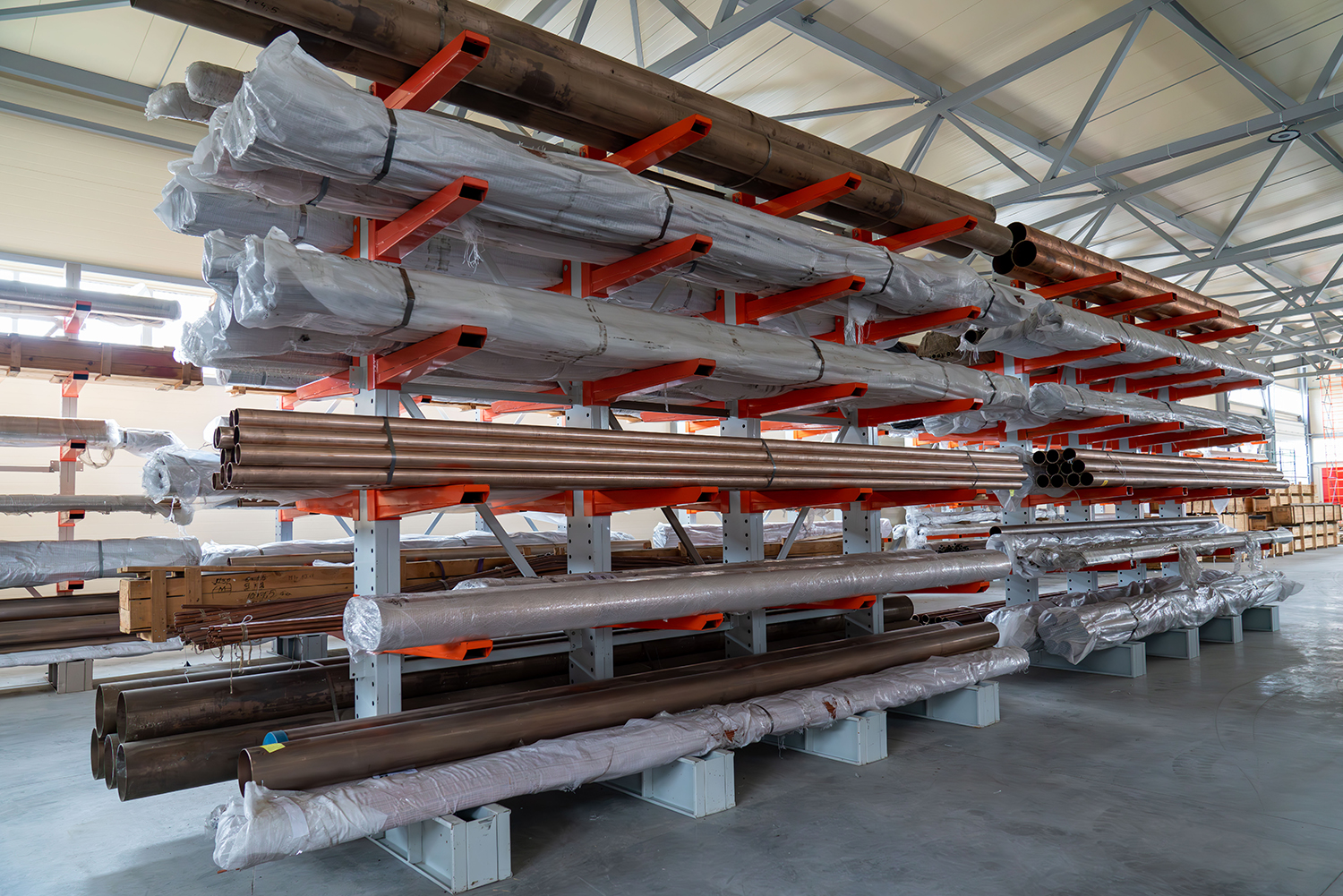
Cantilever racks are cantilever shelving systems designed with arms that extend horizontally from vertical posts, with no front support columns.
This design creates an open, accessible front face where you can load and unload long items without wrestling around support legs.
The fundamental difference between cantilever racks and standard pallet racking is this:
Cantilever racks give you unobstructed access to materials that don’t stack neatly. If you’re storing things, such as:
- Lumber
- Rebar
- Pipes
- Tubing
- Rolls of material
You will need that open front.
Everybody needs a rack that matches their inventory. And if your operation stores long items and you’re using a pallet racking system built for boxes, you’re losing efficiency while creating unnecessary risk.
How Load Capacity Affects Your Storage Choice
The biggest decision you’ll face is whether to invest in light-duty or heavy-duty cantilever systems. Load capacity is where the real differences show up, and it’s where many operations make expensive mistakes.
Light-Duty Cantilever Shelving
Light-duty cantilever rack systems are built for materials that weigh up to roughly 1,000 to 1,500 pounds per arm. They’re ideal for:
- Aluminum or PVC pipes
- Trim molding and lighter lumber
- Smaller rolls of material
- Textiles or fabrics
- Plastic or composite materials
Light-duty systems cost less upfront and require less floor space per unit. They’re also easier to move around if your storage needs change.
The catch? They won’t handle heavy materials, and overloading them creates serious safety risks. A light-duty system pushed beyond its limits can fail suddenly, and that’s a liability you don’t want.
Heavy-Duty Cantilever Racking
Heavy-duty cantilever shelving systems handle 3,000 to 10,000+ pounds per arm, depending on the specific industrial shelving design. They’re built for:
- Steel beams, angles, and structural materials
- Dense hardwoods and specialty lumber
- Rolls of heavy fabrics or metals
- Composite materials and prefabrication components
- Any long items with serious weight
Heavy-duty industrial storage racks cost more, but they give you peace of mind, longer lifespan, and room to grow your inventory without a system upgrade.
For manufacturing operations and distribution centers managing heavy materials, the upfront investment pays for itself in safety and longevity.
Calculating the Right Weight Limits for Your Inventory
The most critical step most people skip is weighing your materials and calculating real load requirements.
Here’s a quick guide where you can start:
- Weigh sample materials from your current inventory
- Calculate the average weight per arm you’ll be storing
- Add a safety buffer (typically 20–30% over average)
- Compare that total against the cantilever system’s rated capacity
Don’t guess your material weights. If you guess and choose light-duty when you need heavy-duty, you’ll either operate with safety risks or outgrow the system within months.
We recommend getting expert guidance on this calculation. It’s important, and our team at Warehouse RacKings has seen operations save thousands by getting it right the first time.
Space and Footprint Differences
Your choice depends on your facility layout and inventory patterns. Let’s quickly compare the difference between their space and footprint:
| Feature | Light-Duty Cantilever Shelving | Heavy-Duty Industrial Storage Racks |
|---|---|---|
| Floor Space Required | Minimal and compact footprint | More substantial per unit |
| Reconfiguration | Easy to move and adjust | Permanent installation |
| Flexibility | High, ideal for changing needs | Low, designed for long-term use |
| Weight Density Per Unit | Lower capacity, less inventory per rack | Higher capacity, more inventory stored |
| Total Inventory in Same Space | Stores less per square foot | Stores significantly more per square foot |
| Best For | Fluctuating storage needs, tight spaces | High-volume operations, consistent inventory |
Cost Expectations and Total Value
Choosing between light-duty and heavy-duty cantilever systems comes down to what you’re storing, how much space you have, and your growth plans. Here’s how to know which one fits your operation.
Choose Light-Duty Cantilever Racks If:
- Your materials average under 1,000 pounds per arm
- You have limited floor space and need flexibility
- You’re storing lighter construction materials, textiles, or smaller rolls
- You’re starting out and want to test the system
Choose Heavy-Duty Cantilever Racking If:
- You store materials consistently over 1,500 pounds per arm
- You operate a manufacturing or distribution center
- You need long-term reliability without frequent replacement
- You’re storing steel, dense lumber, or heavy composite materials
- You want to maximize inventory density in your available space
Light-duty works best when flexibility matters more than capacity. Heavy-duty is the right investment when you’re storing serious weight, running a high-volume operation, or planning to grow without replacing your system.
If you’re unsure which category your operation falls into, that’s exactly what we’re here to help with at Warehouse RacKings.
The Right Choice Protects Your Operation
Choosing the wrong cantilever shelving system creates ripple effects. Safety risks. Wasted space. Unplanned replacements. Operational downtime.
The good news? You don’t have to guess.
At Warehouse RacKing, we can help you assess your specific inventory, calculate realistic weight loads, and match you with the right cantilever rack system, whether light-duty or heavy-duty, new or quality used stock.
Our team has worked with warehouse managers, manufacturers, and facility planners to solve long-item storage challenges. We handle selection and delivery, and provide professional installation within a 2.5-hour radius of York, PA, with nationwide delivery available.
Let’s talk about your storage challenge. Contact us today at Warehouse RacKings INC. Tell us what you’re storing, and we’ll help you pick the right solution.